PPF vs Vinyl Wrap: Which Protection Does Your Customer Actually Need?
Paint protection film and vinyl wrap are often confused, but they serve very different purposes. Here's how to explain the difference — and upsell the right product.
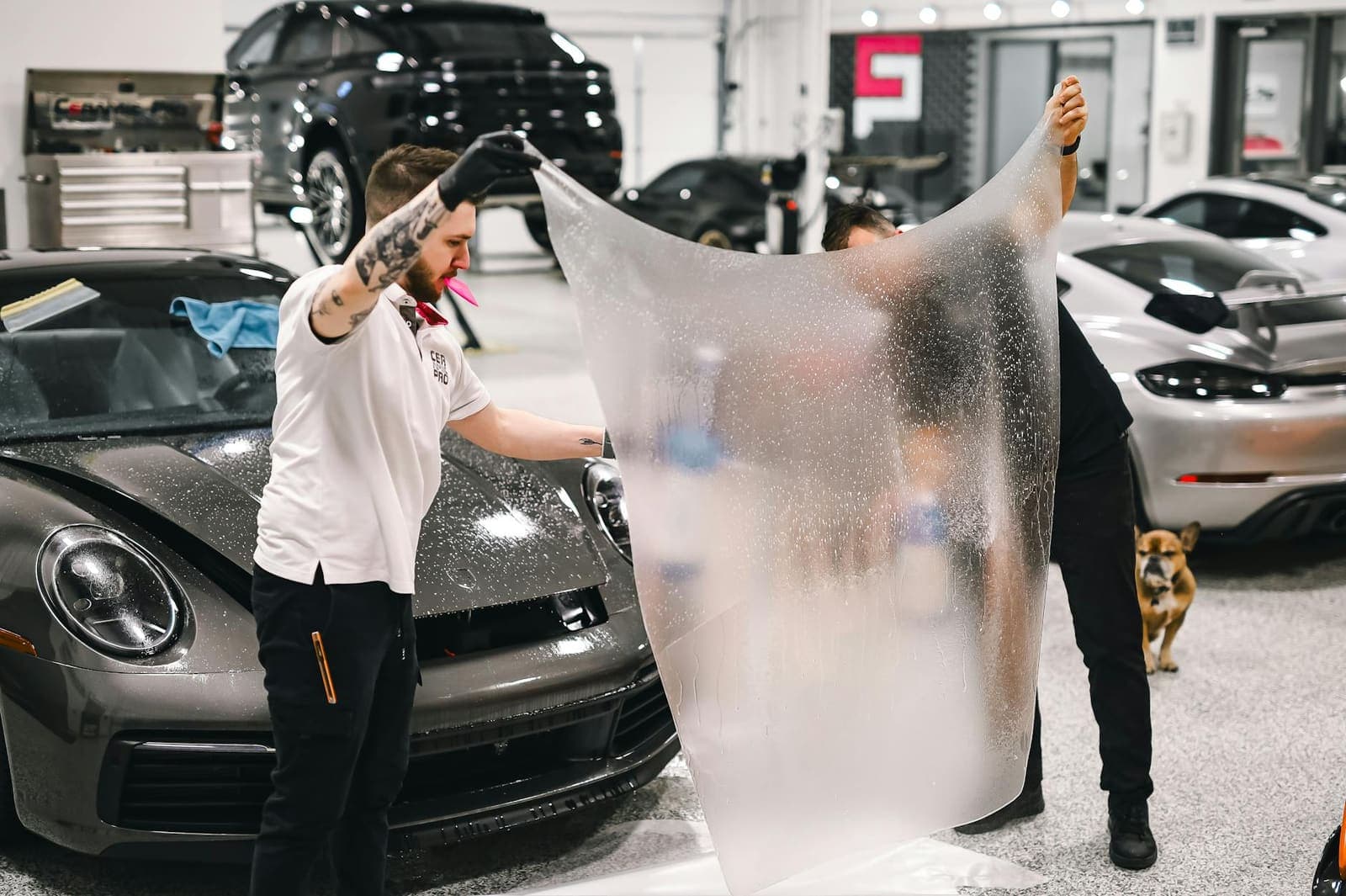
Table of Contents
PPF and vinyl wrap are two different products that often get confused by customers. Both go on the car's paint, both come in large sheets, and both are installed by professionals. That's where the similarity ends.
What Each Product Actually Does
Vinyl wrap changes appearance. It's a thin, colored film applied over paint to change the look of a vehicle. You can wrap a car any color, finish, or pattern. When properly installed and maintained, it comes off cleanly.
PPF protects the paint. It's a thick, optically clear polyurethane film that absorbs rock chips, road debris, scratches, and UV damage. PPF is nearly invisible and doesn't change the car's color. Its job is to take the hit so the paint doesn't.
Both are installed the same way — wet application, squeegee, heat gun — which is why shops often do both. But they're not substitutes for each other.
When Customers Want Vinyl Wrap
Customers come to you for vinyl wrap when:
- •They want a color change without a permanent commitment
- •They want a matte, satin, or textured finish unavailable in paint
- •They're running a business vehicle and want branded graphics
- •They want to protect resale value by keeping original paint untouched under the wrap
The key selling point: vinyl is reversible. A full respray costs $5,000–$15,000. A full vinyl wrap costs $3,000–$5,000 and peels off when they're done. For leased vehicles especially, this is a major advantage.
When Customers Want PPF
PPF customers are usually:
- •New car owners who want to preserve a perfect paint job
- •Exotic or luxury vehicle owners ($80k+ cars where rock chips are a serious problem)
- •Daily drivers on highways or roads with heavy construction
- •Fleet operators trying to delay costly repaints
PPF is particularly popular on:
- •Front bumpers and hoods (highest rock chip exposure)
- •Door edges and handle areas (key scratches)
- •Rocker panels (road debris)
- •Full front-end coverage for highway commuters
Self-healing PPF is the premium tier. These films use a clear coat that repairs light scratches with heat from the sun or warm water. Brands like XPEL, SunTek, and 3M all offer self-healing options at a significant price premium.
Price Comparison
| Product | Partial (front end) | Full vehicle |
|---|---|---|
| Vinyl wrap | $2,000–$2,800 | $3,000–$5,000 |
| Standard PPF | $900–$1,500 | $4,000–$8,000 |
| Self-healing PPF | $1,500–$2,500 | $6,000–$12,000 |
PPF is more expensive per square foot than vinyl because the material is thicker, harder to install, and requires a near-sterile environment. One piece of debris under PPF during installation is visible and costly to redo.
The Combination Upsell
The highest-value jobs combine both: PPF on high-impact zones, vinyl wrap everywhere else.
A common approach on sports cars: - PPF full front end (hood, fenders, bumper, mirrors) - Vinyl color-change wrap on doors, roof, and trunk
This gives the customer protection where it matters most and the color change they want everywhere else. Total ticket on a sports car: $6,000–$10,000.
This is a legitimate upsell, not a stretch. Customers who care enough about their car to come to you for a color change often care about their paint too. Ask the question.
Warranty Differences
Vinyl wrap warranties typically cover: - Material defects (lifting, cracking from material failure) - 2–5 years depending on brand and finish - Usually void if the customer ignores care instructions
PPF warranties are stronger: - 10-year warranties are common on premium brands - Cover yellowing, cracking, and peeling - Some cover edge lifting
Document which product is installed on what zone, the brand and batch number, and the installation date. If a warranty claim comes up later, you need this. Wraptor's job tracking lets you log materials per job so this information is always retrievable.
How to Explain It to a Customer
The simplest framing: "Vinyl wrap changes how your car looks. PPF protects how it looks. They do different things — you can do one, the other, or both."
If they're still unsure, ask: "Are you happy with your current color and just want to protect the paint? That's PPF. Do you want to change the color? That's a wrap. Want both? We can do that too."
Customers comparing prices can point to wrap costs by vehicle and our full wrap pricing guide; for shops, both make useful sales collateral.
Clear explanation closes jobs and prevents disputes later. Customers who understand what they bought don't come back confused about what the product was supposed to do.
Wraptor helps wrap shops track both vinyl and PPF jobs, materials used, and warranty information per vehicle. Book a live walkthrough →

The Wraptor Team
Wrap-industry veterans
The Wraptor team is made up of wrap-industry veterans — shop owners, installers, and designers — writing about pricing, materials, and shop operations from inside the trade.
▚ Keep reading · For Wrap Buyers
▚ Next steps
The Wraptor Newsletter
Pricing data, material tips, and business strategies delivered weekly.